
Chassis Dynamometer and Motorsport Testing: Why Peak Wheel Power Is Not Enough
Repeatable chassis-dynamometer results depend on road-load settings, gear, tire behavior, cooling, vehicle control strategy and correction methods. Peak power alone cannot establish a valid comparison.
A chassis dynamometer measures the interaction between the driven tires and rollers. The displayed power is therefore affected by the complete vehicle, test mode and calculation chain, not only by the engine.
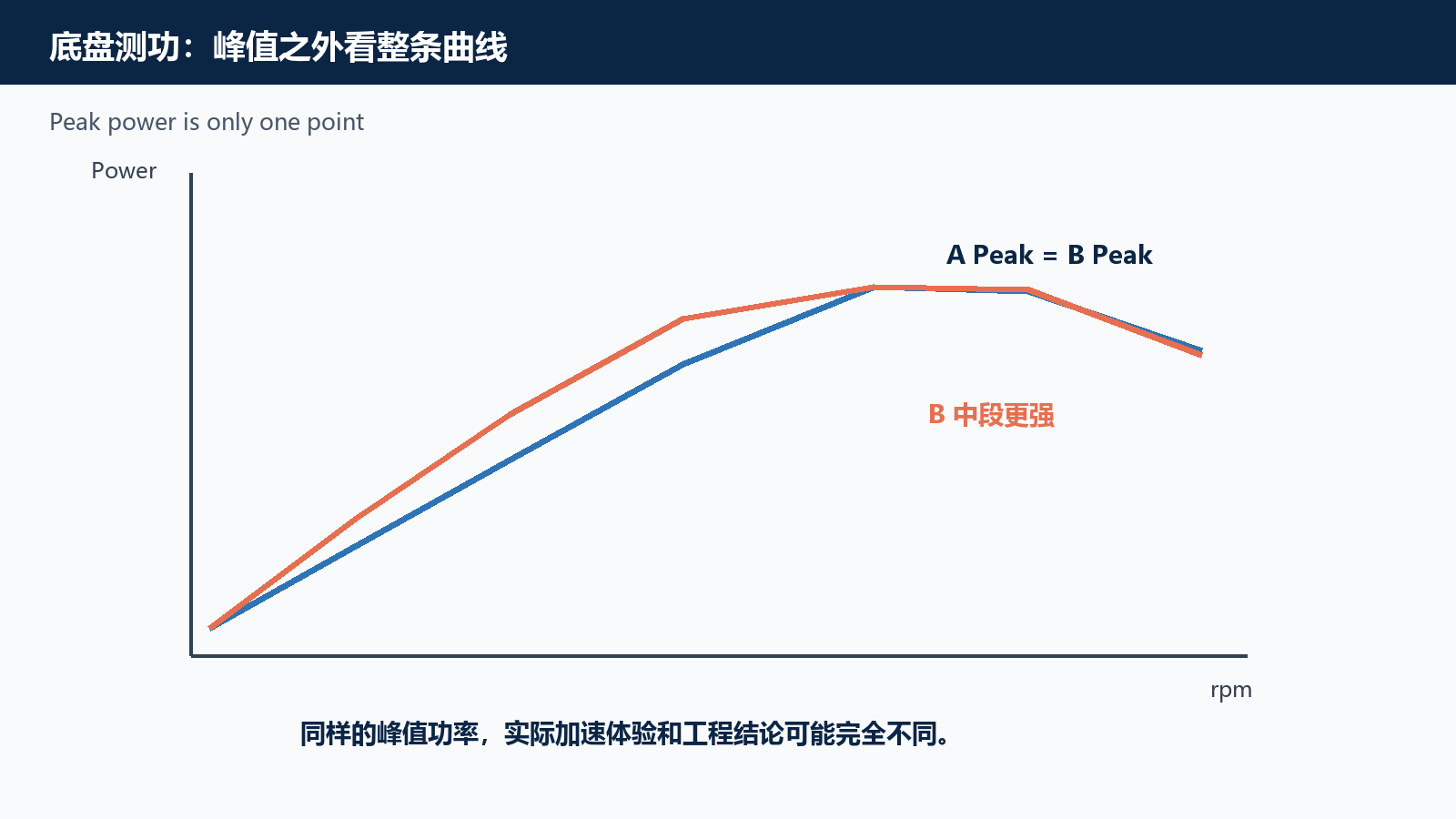
For development, tuning or motorsport work, the value of a run lies in repeatability and recorded conditions. A graph with a larger peak but uncontrolled temperature or correction can be less informative than a lower, reproducible result.
Wheel power, engine power and calculated loss
Power at the wheels is measured from roller torque and speed. Engine power measured on an engine dynamometer is a different quantity. Some chassis systems estimate drivetrain loss during coastdown, but the estimate depends on assumptions and should not be presented as a direct engine measurement.
Reports should identify whether values are measured wheel power, corrected wheel power or an estimated crankshaft figure. Mixing these labels makes comparisons invalid.
Control the variables before comparing runs
Use the same gear, tire pressure, tie-down method, warm-up state, ramp rate or steady-state point, fan arrangement and electronic mode. Record fuel, modifications, ambient conditions and relevant fluid or intake temperatures.
Tire heating, roller contact and strap force change losses. Repeated runs can also trigger thermal protection or heat soak. A comparison protocol should define stabilization time and a rule for excluding abnormal runs.
Road-load simulation and coastdown
For regulatory or engineering simulation, the dynamometer reproduces defined rolling and aerodynamic resistance through coefficients or a verified coastdown relationship. Inertia and parasitic losses must be characterized.
A performance sweep with minimal load and a road-load-controlled emissions cycle are different tests. The operator should select the mode for the intended question rather than using one attractive graph for every purpose.
Correction factors and weather data
Atmospheric correction can normalize engine output for temperature and pressure under a specified method, but it cannot correct wheel slip, inadequate cooling, wrong gear or intervention by the vehicle controller.
State the correction standard and show uncorrected data where useful. Humidity, barometric pressure and intake-air temperature sensors need traceability because they influence the corrected result.
AWD, hybrids and control intervention
AWD vehicles may require synchronized front and rear roller speeds and a dynamometer compatible with torque-distribution logic. Stability control, transmission protection, hybrid strategy and regeneration can change output or end a run.
Follow vehicle and equipment limits. Stop for abnormal vibration, tire deformation, excessive temperature, restraint movement or warning messages. Unverified disabling of safety functions is not an acceptable test method.
What a credible report contains
Record dynamometer and software version, vehicle configuration, gear, mode, load or ramp settings, environment, tires, restraint, cooling, valid runs and exclusion reasons. Retain power, torque, engine speed or road speed and relevant auxiliary channels.
For motorsport and tuning, compare curves and controlled conditions, not just the largest number. Repeatability is the foundation of a useful performance claim.
Official references
This article is based on the official publications below. Verify the current edition, effective date and local authority requirements before application.
- GB/T 18276-2017: Chassis-dynamometer test methods and evaluation criteria for vehicle power performance; confirmed current after review on 8 December 2025.
- ISO 10521-2 and ISO 1585: International standards related to chassis-dynamometer road-load simulation and engine net-power testing.
- SAE J1349_202511: Engine Power Test Code