
Headlamp Testing: Separating Beam Aim, Luminous Intensity and Bay Error
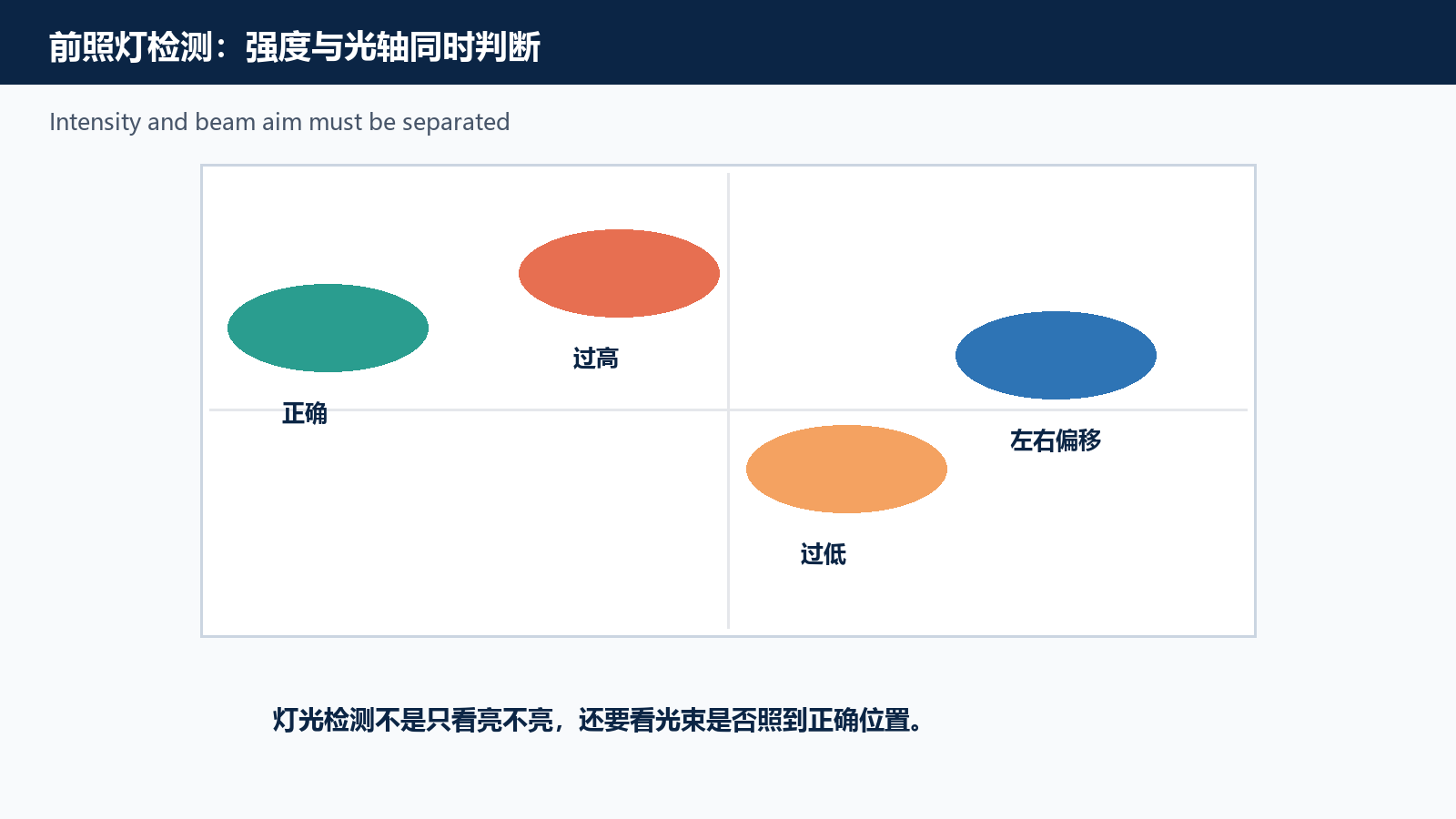
A headlamp may be bright but mis-aimed, or correctly aimed but too weak. Reliable inspection separates photometric output from beam orientation and controls vehicle position, floor level, ambient light and tester alignment.
Headlamp safety has two distinct dimensions: how much light reaches a defined direction and where the beam is aimed. Treating both as a single 'lamp condition' hides useful diagnostic information.
Modern LED, matrix and adaptive systems add variable patterns and automatic leveling. The tester, vehicle and operating mode must be prepared as one measurement setup.
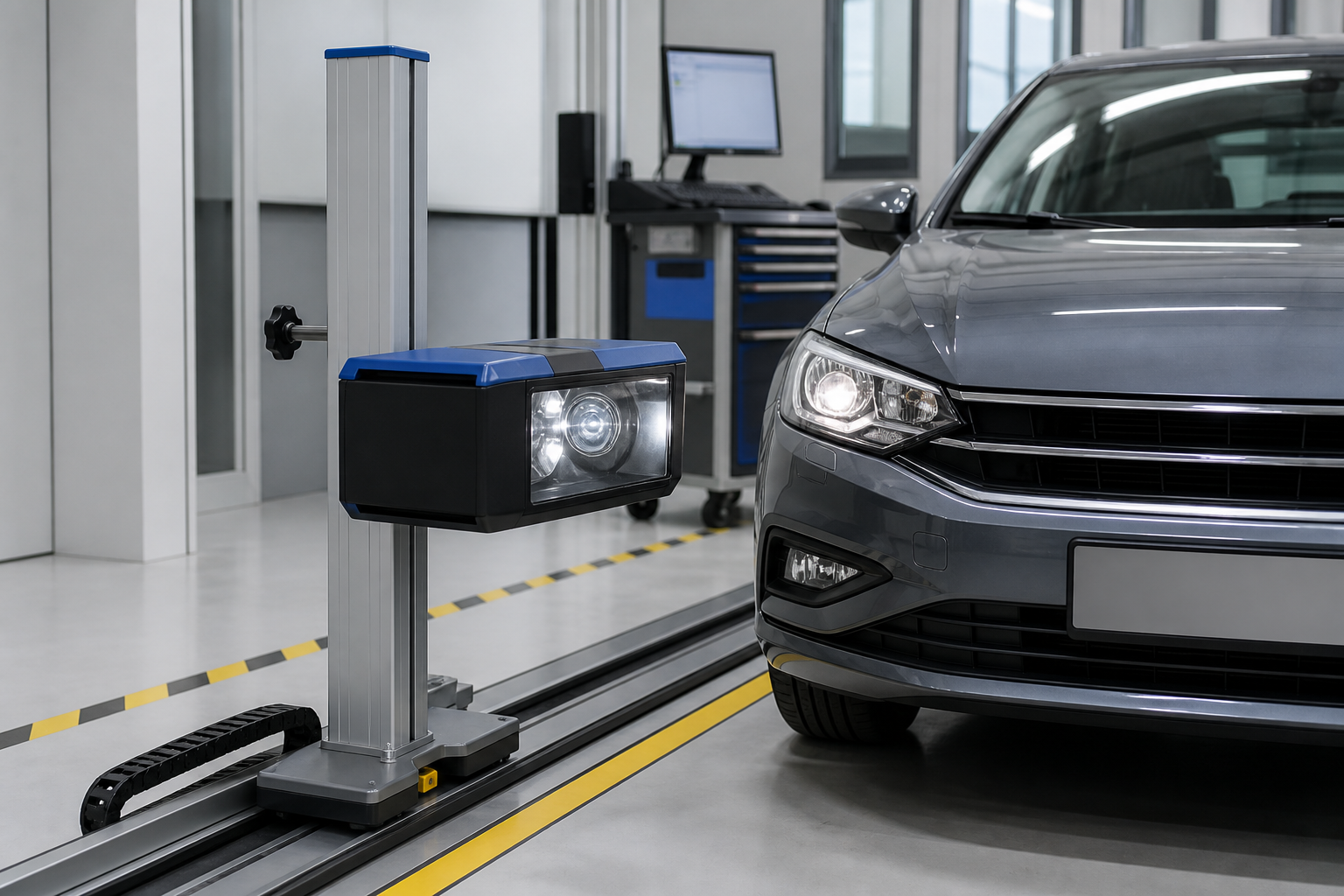
Luminous intensity and beam aim are different
Luminous intensity describes light output in a defined direction and is commonly expressed in candela. Aged sources, yellowed lenses, damaged reflectors, contamination or low supply voltage can reduce intensity.
Beam aim is derived from the cut-off, elbow point, high-beam center or another defined pattern feature. Excessive upward aim increases glare; low aim shortens seeing distance; lateral error moves useful illumination away from the road.
Understand beam slope geometrically
A downward beam slope of 1% means approximately 1 cm of vertical drop per metre, or 10 cm over 10 m. This explains the percentage, but it is not a universal acceptance limit.
A headlamp tester measures the pattern over a short distance and converts it to angular or percentage values. Accurate relative position between tester, vehicle centerline, optical center and floor is therefore essential.
Vehicle attitude changes the result
Tire pressure, load, suspension height, air-suspension mode, fuel or battery mass distribution and headlamp leveling control alter body pitch. Stabilize the vehicle and confirm automatic leveling initialization where applicable.
If both lamps move in the same direction, first inspect common factors such as vehicle positioning, ride height, floor level and tester alignment. If one side differs, investigate the lamp mounting or adjustment mechanism.
Bay geometry is part of the measurement
Floor slope, local unevenness, guide-rail error, column verticality, working distance and vehicle yaw can appear as lamp misalignment. Reference lines and level checks should therefore be included in routine lane control.
Control ambient light and keep the tester's optical window clean. Condensation, mirror damage and unstable supply voltage can reduce repeatability even when internal software appears normal.
Adaptive and matrix lamps
Adaptive high beam, matrix LED and automatic leveling systems change the pattern according to steering, speed, camera inputs, load and fault state. Confirm whether the vehicle provides an inspection or workshop mode and whether the pattern is stable.
The tester must recognize the relevant cut-off or feature for that lamp technology. A conventional halogen pattern assumption should not be applied to every modern system.
Inspection versus type approval
Periodic roadworthiness inspection evaluates the vehicle's current condition under local procedures. UN R48 addresses installation of lighting and signaling devices, related UN Regulations cover lamp type approval, and ISO 10604:2026 addresses equipment for measuring headlamp beam orientation.
Do not apply a type-approval photometric point directly as an in-use limit unless the local procedure says so. Likewise, a workshop adjustment target is not automatically a regulatory decision rule.
Report and troubleshooting
Retain left and right intensity, vertical and horizontal aim, lamp type, vehicle preparation, leveling state, tester alignment, environmental conditions and retest details. Review common setup factors before adjusting a lamp.
A reliable headlamp result begins with geometry. When vehicle attitude and tester alignment are controlled, intensity and aim become meaningful, separate measurements.
Official references
This article is based on the official publications below. Verify the current edition, effective date and local authority requirements before application.
- GB 38900-2020: Items and methods for roadworthiness inspection of motor vehicles; effective 1 January 2021.
- Directive 2014/45/EU: EU minimum framework for periodic roadworthiness tests; consolidated text current to 20 May 2023.
- US NHTSA FMVSS: Federal Motor Vehicle Safety Standards in 49 CFR Part 571 use a manufacturer self-certification system.
- UN Regulations R13, R13-H, R48, R100, R154 and R168: International regulatory subjects including braking, lighting installation, electric powertrain safety, WLTP and global RDE.
- SAMR: GB 38900—2020
- ISO 10604:2026: Equipment for measurement of headlamp beam orientation
- UNECE: Official UN Regulation No. 48 series page