
NEV Inspection Is Not One Device: High-Voltage Safety, Insulation and Diagnostics
Inspection of electric and hybrid vehicles combines conventional roadworthiness items with high-voltage safety, traction battery information, diagnostics and compatible brake or dynamometer procedures.
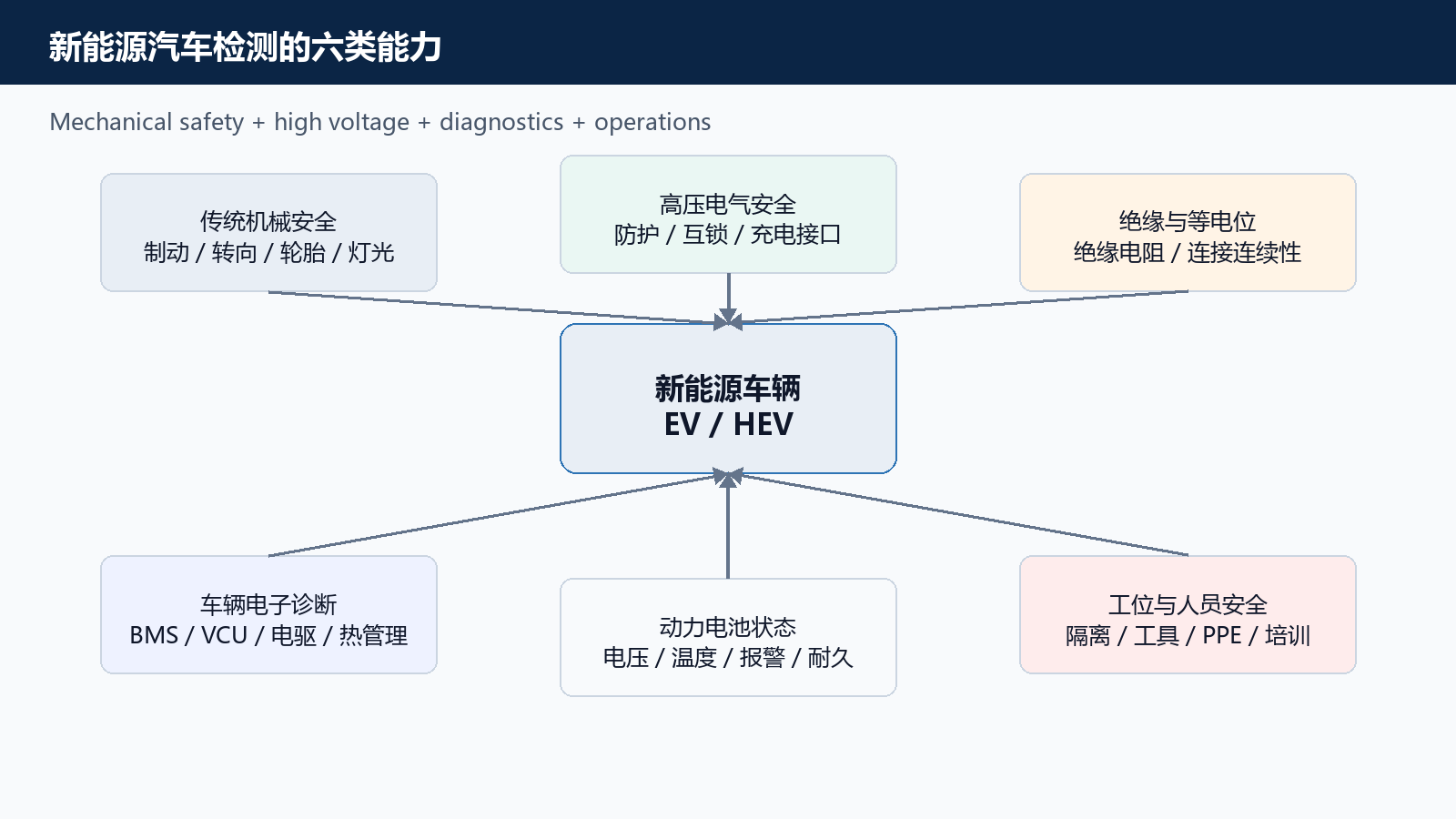
An electric or hybrid vehicle still requires assessment of brakes, steering, tires, lighting and chassis. Electrification adds high-voltage hazards, a traction battery and charging systems, multiple control units and operating strategies that may alter conventional lane tests.
Type approval, periodic in-use inspection, workshop diagnosis and research testing have different purposes. No single diagnostic value or instrument can replace a properly defined process.
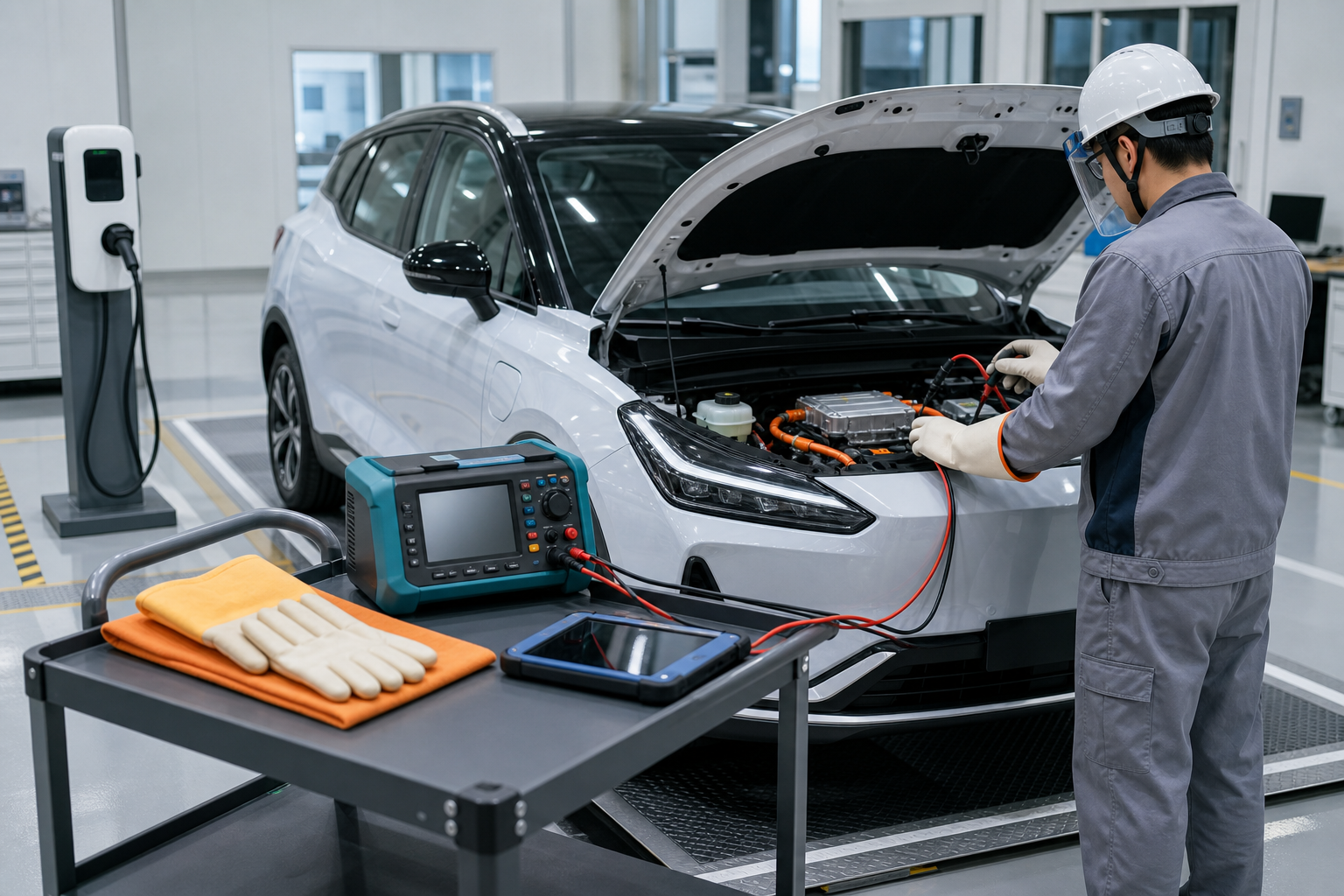
Define the inspection scenario
Start by identifying whether the task is statutory inspection, pre-delivery check, workshop diagnosis, fleet maintenance or R&D. This determines authority, access depth, permitted disassembly and the meaning of the final report.
Product safety standards such as UN R100 or national EV standards are not automatically periodic-inspection procedures. Their requirements may inform risk control without becoming direct pass/fail items for an in-use vehicle.
High-voltage safety starts before measurement
Separate visual inspection, non-invasive diagnosis and work requiring access to the high-voltage system. Control personnel authorization, PPE, insulated tools, vehicle immobilization, exclusion zones, isolation and prevention of re-energization.
Do not assume that high voltage is absent because the ignition is off or a display is blank. Follow manufacturer information and the organization's electrical-safety procedure before touching connectors or exposed parts.
Insulation resistance needs context
Insulation measurement depends on test points, energized state, vehicle mode, applied test voltage, parallel components and the influence of onboard insulation monitoring. A low-voltage multimeter is not a substitute for rated equipment and a vehicle-specific procedure.
Interpret the result against the architecture and applicable method. One reading taken under an undefined state is not proof that the battery or complete vehicle is absolutely safe.
Diagnostic data has defined limits
DTCs, cell-voltage spread, temperatures, isolation status, SOC and estimated SOH can locate concerns, but definitions and algorithms are manufacturer-specific. SOC is not SOH, and SOH is not a thermal-safety certificate.
Separate raw observations, engineering assessment and formal conformity decisions. Record ECU coverage, software database version and communication failures so that a missing parameter is not mistaken for a normal value.
Brake and dynamometer compatibility
Regenerative braking and multi-motor torque distribution may change with state of charge, temperature, wheel-speed difference, drive mode and stability-control logic. Roller equipment must suit the axle arrangement and prescribed test mode.
If a controlled condition cannot be established, stop and use an approved alternative. Do not bypass vehicle controls through an unverified procedure.
Emergency readiness and lifecycle updates
Prepare isolation and escalation for abnormal heat, smoke, odor, leakage, impact damage or thermal events. Staff must know evacuation, alarm and emergency-resource arrangements.
Vehicle coverage, diagnostic databases and manufacturer procedures evolve quickly. The service agreement should define software updates, new-model validation, training and technical escalation.
A complete NEV record
Record vehicle identity, powertrain type, applicable procedure, personnel authorization, vehicle state, instrument and range, raw values, DTCs, abnormal termination and conclusion. Preserve evidence without claiming more than the method establishes.
NEV capability is created by trained people, safe bays, compatible conventional testers, high-voltage instruments, diagnostic coverage and controlled procedures working together.
Official references
This article is based on the official publications below. Verify the current edition, effective date and local authority requirements before application.
- GB/T 44500-2024: Inspection code for the operational safety performance of new-energy vehicles; effective 1 March 2025.
- GB 18384-2025 and GB 38031-2025: Safety requirements for electric vehicles and traction batteries; effective 1 July 2026.
- Regulation (EU) 2024/1257 (Euro 7): EU type-approval rules for emissions and battery durability; applies to new M1/N1 types from 29 November 2026.
- UN Regulations R13, R13-H, R48, R100, R154 and R168: International regulatory subjects including braking, lighting installation, electric powertrain safety, WLTP and global RDE.
- SAMR: GB 38031—2025 Traction battery safety requirements
- UNECE: UN Regulation No. 100 Rev.4 Amendment 1