Roller Brake Testing: Braking Force, Imbalance and Test-Bench Conditions
A roller brake tester measures tire-to-roller force under controlled conditions. Correct interpretation requires vehicle preparation, axle recognition, stable traction and an understanding of how imbalance is calculated.
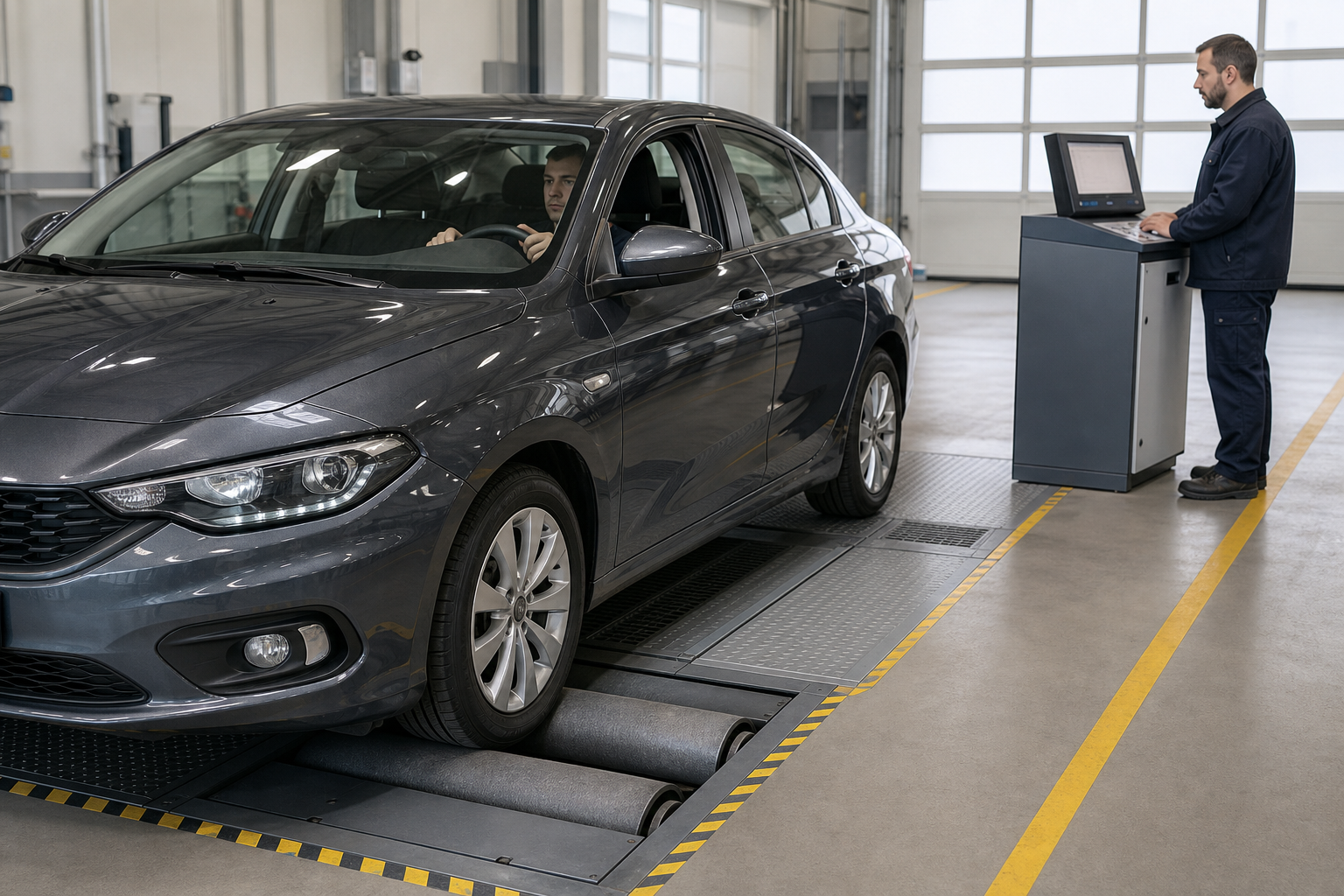
The roller brake tester does not measure stopping distance directly. It measures the tangential force produced at each wheel while the rollers drive the tire at low speed and the operator applies the brake.
The result combines vehicle braking performance with tire condition, roller adhesion, axle load, positioning and control-system behavior. A number without those conditions can be misleading.
How braking force is produced and measured
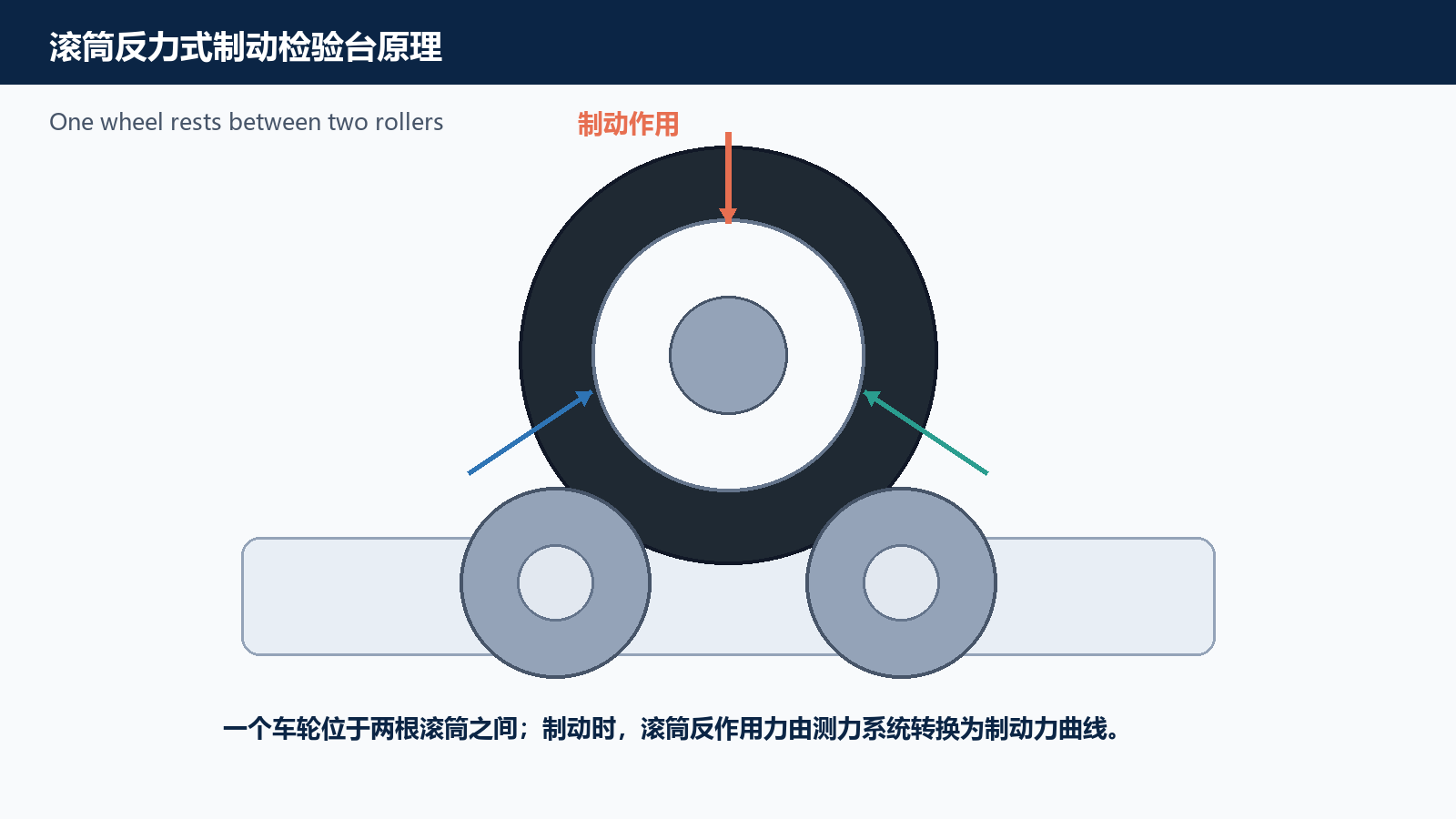
Each roller set rotates the wheel and senses reaction torque, which is converted into braking force. Left and right channels should be synchronized and zeroed, and the tester must recognize wheel lock or excessive slip.
Service-brake, parking-brake and auxiliary-brake evaluations use different operating steps. The software should guide the operator and retain individual wheel curves, not only the final pass/fail result.
Brake imbalance is a comparative indicator
Imbalance compares left and right braking force on the same axle using the formula required by the applicable standard. Because jurisdictions may define the denominator or evaluation point differently, the software rule must match the local method.
A high imbalance can reflect hydraulic, pneumatic, friction-material or mechanical differences, but it can also arise from poor tire adhesion, incorrect positioning or unstable application. The tester identifies a symptom; workshop diagnosis identifies the cause.
Axle load and braking efficiency
Overall braking efficiency relates total braking force to vehicle weight or measured axle load under the prescribed rule. Reliable load data are therefore essential. Static weighing, integrated weighing and imported registration mass are not automatically equivalent.
Dynamic axle-load transfer is limited at low roller speed, which is one reason roller results are not identical to a road stop. Acceptance limits must come from the inspection method, not from an arbitrary comparison with road performance.
Tires, rollers and environmental conditions
Tire pressure, tread, contamination, moisture and temperature influence adhesion. Roller surface condition, drainage, speed and coefficient of friction also matter. A wheel that slips early can cap the measured force before the brake reaches its capability.
Daily checks should include the roller surface, foreign objects, zero condition, sensors, wheel-presence devices, emergency stop and mechanical noise. Reference-force checks and synchronization checks should follow the quality plan.
AWD, electric and unusual vehicles
Permanent all-wheel-drive systems, limited-slip differentials, electronic parking brakes, regenerative braking and stability control may react to axle-speed differences. Confirm equipment compatibility and the vehicle manufacturer's procedure before testing.
Where a synchronized roller mode, plate tester or approved alternative is required, use that method. Do not disable safety systems or force a vehicle through an incompatible test merely to obtain a reading.
A result that can be reviewed
Retain vehicle identity, axle and wheel assignment, axle load, force curves, imbalance calculation, lock or slip event, operator, equipment status and any retest. This evidence allows abnormal results to be distinguished from lane errors.
Braking force belongs to a complete test condition: vehicle, tires, rollers, axle load, operator input and calculation rule. Good equipment makes each part visible.
Official references
This article is based on the official publications below. Verify the current edition, effective date and local authority requirements before application.
- GB/T 13564-2022: Roller brake testers for motor vehicles; effective 1 October 2022.
- Thailand DLT Roller Brake Tester Notice (B.E. 2555): Form, dimensions, standards and performance requirements for roller brake testers used by private inspection stations.
- Directive 2014/45/EU: EU minimum framework for periodic roadworthiness tests; consolidated text current to 20 May 2023.
- UN Regulations R13, R13-H, R48, R100, R154 and R168: International regulatory subjects including braking, lighting installation, electric powertrain safety, WLTP and global RDE.
- SAMR: GB 38900—2020
- ISO 21069-1:2004: Roller brake tester requirements